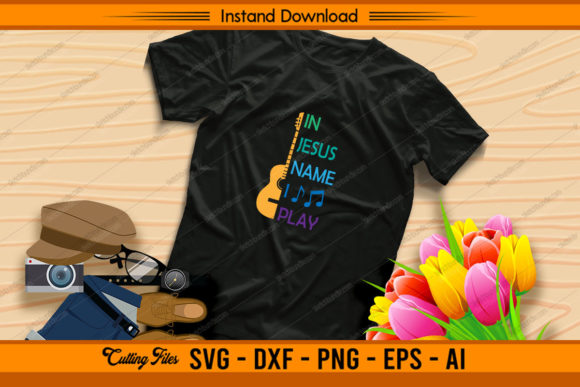
I Jesus Name I Play Guitar: Embroidery Review
As a professional embroidery digitizer and product reviewer, I approach every new graphic with a specific question: will this actually stitch out cleanly on fabric? When evaluating I Jesus Name I Play Guitar, my assessment goes beyond the screen. While this product is marketed as SVG and PNG cutting files for machines like Cricut or Silhouette, many makers in the Crafts category adapt these Graphics for needle and thread. My review focuses entirely on the viability of this design for real-world embroidery projects, assessing its potential as a machine embroidery design rather than just a vinyl cut file.
First Impressions and Visual Personality
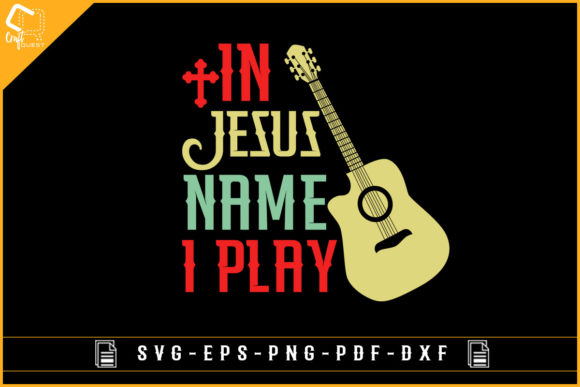
At first glance, I Jesus Name I Play Guitar carries a distinct mood that blends faith-based expression with musical passion. The layout suggests a bold, declarative statement, likely featuring typography paired with guitar iconography. For an embroidery designer, this combination immediately signals a need for balance. Text-heavy designs with instrumental motifs can become dense quickly. Visually, it feels like a design meant for casual wear or personal expression rather than formal liturgical items. It has a youthful, energetic personality that would resonate well with worship leaders, Christian musicians, or youth group members.
The shape and flow of the artwork appear optimized for print, which means we must mentally translate it to stitches. Unlike a purpose-built embroidery file, a graphic adapted for stitching requires careful consideration of negative space. If the guitar element is intricate, it may need to be simplified into a satin stitch outline or a stylized fill stitch area to prevent puckering. The visual weight seems centered, making it a strong candidate for chest placements or back-of-hoodie statements, provided the digitizing respects the original artistic intent without overcrowding the hoop.
Real-World Application: The Worship Leader Sweatshirt
To truly judge this asset, I envision a specific scenario: creating a custom crewneck sweatshirt for a church worship team member. This is a classic use case where I Jesus Name I Play Guitar would shine. In this context, the design isn't just decoration; it’s an identifier. I picture hooping a mid-weight cotton fleece sweatshirt and positioning the design on the left chest or centered across the yoke.
For this custom apparel project, the design needs to withstand both the stitching process and frequent washing. If I were adapting this graphic, I would ensure the lettering uses a sturdy column width to prevent sinking into the fleece nap. The guitar element could serve as an applique design accent using a contrasting fabric, which reduces stitch density and adds tactile interest. This approach transforms a flat digital graphic into a premium handmade product. Customers receiving this personalized gift expect crisp edges and legible text. If the adaptation is successful, the result is a garment that feels boutique-quality rather than mass-produced, directly boosting buyer engagement and trust in your craft business.
Where Caution is Required in Stitching
Despite its appeal, I Jesus Name I Play Guitar presents challenges that every Etsy seller and hobbyist must navigate. Because this originates as a print-ready file, fine details suitable for ink may be disastrous for thread. I advise extreme caution when attempting this design on textured fabrics like terry cloth or ribbed knits. The interplay between faith text and musical imagery often involves varying line weights; if those lines are too thin, they will disappear into the fabric texture.
Furthermore, consider the hoop size limitations. If you are working with a 4x4 hoop, fitting both the phrase and the guitar graphic might require shrinking elements to the point of illegibility. Tiny lettering is the enemy of clean embroidery. On stretchy fabrics like performance tees or baby onesies, the tension required for detailed graphics can cause significant distortion. For baby embroidery specifically, I would recommend avoiding this design unless it can be drastically simplified, as high-density areas can be scratchy against sensitive skin. Always verify that the complexity matches your machine’s capabilities and your chosen stabilizer strategy before committing to a final finished product.
Impact on Product Value and Brand Consistency
Using I Jesus Name I Play Guitar effectively can significantly elevate the perceived value of your inventory. For small shop product lines, consistency is key. If you offer this design on a tote bag design, ensure the stitch style matches other religious or musical items in your catalog. A cohesive aesthetic builds brand recognition. When executed well, this design bridges two passionate niches—faith and music—creating a highly giftable item for holiday embroidery seasons or graduation gifts.
However, poor execution damages credibility. If the thread colors clash or the registration is off because the graphic wasn't properly digitized for fabric, customers will notice. Professionalism in commercial embroidery comes from understanding that not every vector graphic translates perfectly to thread. By treating this asset with respect and testing thoroughly, you demonstrate expertise. This attention to detail is what separates a serious digital product seller from an amateur, fostering long-term customer loyalty and positive reviews.
Essential Designer Notes Before You Stitch
Before loading I Jesus Name I Play Guitar into your machine or listing it as a printable mockup, please adhere to these practical guidelines. Since the product description specifies instant download files for cutting machines, you must confirm licensing and technical compatibility for embroidery use.
- Verify File Format: Ensure you have converted or digitized the SVG/PNG into a proper digital embroidery file format (like PES, DST, or JEF) compatible with your specific machine.
- Test on Scrap Fabric: Never stitch directly on a final garment without a test run. Check how the running stitch outlines align with fill areas.
- Check Stabilizer Pairing: Match your stabilizer to the fabric weight. A cutaway stabilizer is usually best for sweatshirts to support the design's weight over time.
- Review Stitch Density: If adapting from a print file, reduce density where possible to prevent bulletproof stiffness, especially in large solid areas.
- Contrast Testing: Test the design in black and white mockups to ensure readability. What works in color may fail in monochrome thread.
- Licensing Confirmation: Double-check if the license permits selling finished embroidered goods or if it is restricted to personal use only.
- Mockup Accuracy: If selling the digitized version, use realistic design assets for previews so buyers understand the actual stitch texture versus the flat graphic.
Ultimately, I Jesus Name I Play Guitar holds immense potential for the right maker. It speaks to a specific, heartfelt intersection of identity and hobby. Whether you are creating an embroidered patch for a guitar case or a meaningful piece of custom apparel for a ministry event, success lies in respecting the medium. Treat the transition from screen to fabric with patience and technical precision. When you do, this design can become a standout addition to your creative repertoire, delivering joy to both the maker and the recipient.