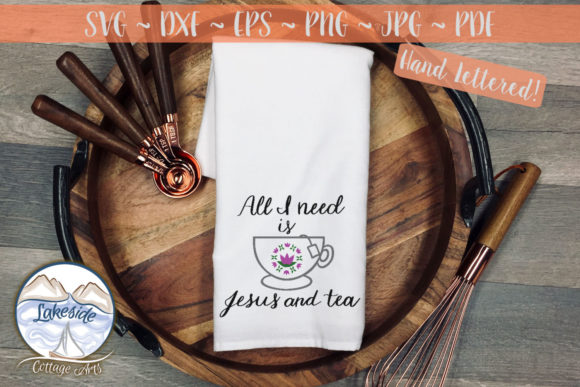
All I Need is Jesus and Tea Graphics for Crafts
When evaluating a new graphic design asset for my shop, I always look beyond the initial aesthetic to determine its actual commercial viability. As a digital product creator preparing a fresh collection for Etsy and print-on-demand platforms, my first impression of the "All I Need is Jesus and Tea" design was that it perfectly captures a specific, high-intent niche. The mood is undeniably cozy yet faithful, striking a balance between modern farmhouse aesthetics and traditional Christian living. It does not feel overly corporate or generic; instead, it carries a handmade, personal warmth that resonates deeply with buyers looking for faith-based home decor or gifts. For sellers in the Crafts category, this visual personality is crucial because it suggests authenticity rather than mass production.
This asset appeals directly to an audience that values slow mornings, devotionals, and intentional living. From a business perspective, this means the buyer is likely looking for items that facilitate a routine or express a personal testimony. The hand-lettered style implies a human touch, which increases perceived value in a marketplace saturated with AI-generated content. When I assess this illustration, I see a versatile anchor piece for a broader "Faith and Comfort" collection rather than just a standalone graphic. It feels feminine without being juvenile, making it safe for adult women’s ministry merchandise, bridal shower gifts, or personal devotional journals.
Commercial Applications Across Digital and Physical Products
The true test of any digital download is its adaptability across multiple revenue streams. Based on the composition of "All I Need is Jesus and Tea," I can immediately identify several high-potential applications for my shop. Start your morning off right with a tea mug and your Bible when you decorate the mug with this hand-lettered and drawn design; this specific use case is the most obvious, but the utility extends far beyond ceramic ware. As a sublimation design, the artwork needs to be tested at 300 DPI to ensure the ink transfer remains crisp on coated surfaces. I would prioritize this for 15oz white mugs and tapered tumblers, as the verticality of hand-lettering often complements cylindrical shapes better than horizontal layouts.
For Cricut users and vinyl crafters, the SVG design version requires careful inspection. Hand-drawn elements can sometimes result in jagged nodes or open paths that frustrate customers during weeding. Before listing this as a cut file, I would run a test cut on permanent vinyl to verify that the intricate loops in the lettering hold together. If the design passes this stress test, it becomes a prime candidate for t-shirt designs, tote bags, and wooden signs. Conversely, the PNG design format opens doors for digital planners and printable wall art. I envision this asset working beautifully as a header in a digital prayer journal or as a centerpiece in a 5x7 printable card bundle. The transparency allows for easy layering over textured paper backgrounds or watercolor washes, which adds significant value for Canva template sellers creating social media graphics for church groups or Christian influencers.
Optimizing Listing Presentation and Visual Hierarchy
In a crowded creative marketplace, your thumbnail determines your click-through rate. "All I Need is Jesus and Tea" has strong potential for listing images because the text itself acts as the hook. However, presentation is everything. When creating product mockups, I recommend placing this design on neutral, warm-toned backgrounds like oatmeal linen, soft sage, or warm terracotta. These colors reinforce the "tea and Bible" narrative without competing with the artwork. Avoid stark white backgrounds for lifestyle shots, as they can make the design look flat and disconnected from the cozy emotion it aims to evoke.
Visual hierarchy is equally important when bundling this asset. If you are selling a design bundle, use this graphic as the hero image on the main listing photo. Its detailed hand-lettering draws the eye, while simpler supporting elements (like small tea cup icons or floral accents) should be arranged around it to suggest volume without clutter. For Etsy product listings, show the design in context: a mug steaming on a wooden table, a framed print above a reading chair, or a sticker on a laptop lid. This visual storytelling helps the customer imagine owning the finished product, bridging the gap between a digital file and a tangible experience. Trust is built when customers can clearly see how the commercial design translates to real-world use.
Strategic Placement and Technical Limitations
While versatile, this asset is not universally applicable. It works best in medium-to-large formats where the nuances of the hand-drawn strokes remain visible. Large product previews, themed bundles, and decorative layouts are ideal environments. It shines in packaging design for tea sampler boxes or as a branding element for a Christian lifestyle blog. However, sellers must exercise caution when scaling down. Tiny sticker details or complex layouts may cause the finer lines of the lettering to disappear or bleed during printing. I would avoid using this specific design for intricate planner stickers smaller than one inch, as the legibility will suffer.
Additionally, consider contrast carefully. Hand-lettered designs often rely on varying line weights that can get lost on dark backgrounds unless a white outline or shadow effect is applied. If you plan to offer this as a t-shirt design for black or navy garments, ensure you have a reversed or outlined version included in your files. Crowded thumbnails are another risk; because the phrase is long, adding too many extra decorative elements in the preview image can make the text unreadable on mobile devices. Keep the focus tight. For Cricut project files, avoid including excessive texture within the cut lines, as this creates unnecessary cut points and slows down the machine. Save textures for the PNG sublimation versions only.
Seller Checklist for Quality Assurance and Licensing
Before publishing "All I Need is Jesus and Tea" to your shop, run through a practical quality assurance checklist. First, verify the commercial license terms explicitly. Ensure you have the right to sell physical products and whether there are limitations on digital end-products or POD usage. Never assume rights; protect your small business branding by documenting permissions. Next, organize your files logically. Customers appreciate clear folder structures labeled by format and size. Pair this script font with a clean sans-serif or a classic serif in your marketing materials to create a professional brand identity that balances whimsy with readability.
- Test Print Colors: Screen colors rarely match CMYK output. Print a physical proof to check if the tea-colored tones look muddy or vibrant.
- Verify Transparency: Open the PNG in multiple programs to ensure no white boxes remain around the edges.
- Check Node Count: Simplify SVG paths to ensure smooth cutting for handmade business owners using entry-level machines.
- Mockup Diversity: Create previews showing both light and dark application scenarios to reduce customer support questions.
- Font Pairing: Test complementary fonts beforehand so you can offer suggestions in your listing description for Canva template users.
Ultimately, "All I Need is Jesus and Tea" is a strong contender for shops focusing on faith, wellness, and domestic arts. By treating it as a strategic business asset rather than just a pretty picture, you can maximize its ROI across seasonal collections and evergreen listings. Whether used for a simple mug design or a comprehensive digital planner kit, success lies in rigorous testing and thoughtful presentation. Validate the technical quality, respect the licensing, and present it with the same intentionality that the design itself promotes. This approach ensures your design assets not only attract clicks but also convert browsers into loyal customers who trust your shop for their creative and spiritual needs.